On this page
“Comfort” is not a specification, and yet it is the most requested feature in every city bike and kids bike enquiry. Two buyers can ask for a comfortable bicycle and receive two completely different machines, and both suppliers will be right. The way out is to write the contact points down as numbers.
Three contact points decide comfort
Fit dimensions follow the order. The RFQ takes model, rider size range and quantity; the reply returns FOB with saddle height and handlebar width set for that range.
The rider touches the bicycle in three places: saddle, handlebar and pedals. Everything else — frame material, tyre width, suspension — changes how the ride feels, but the contact points decide whether the rider keeps riding. A wholesale specification that leaves those three vague is a specification the factory will fill with whatever is in stock.
Saddle: width and shape before brand
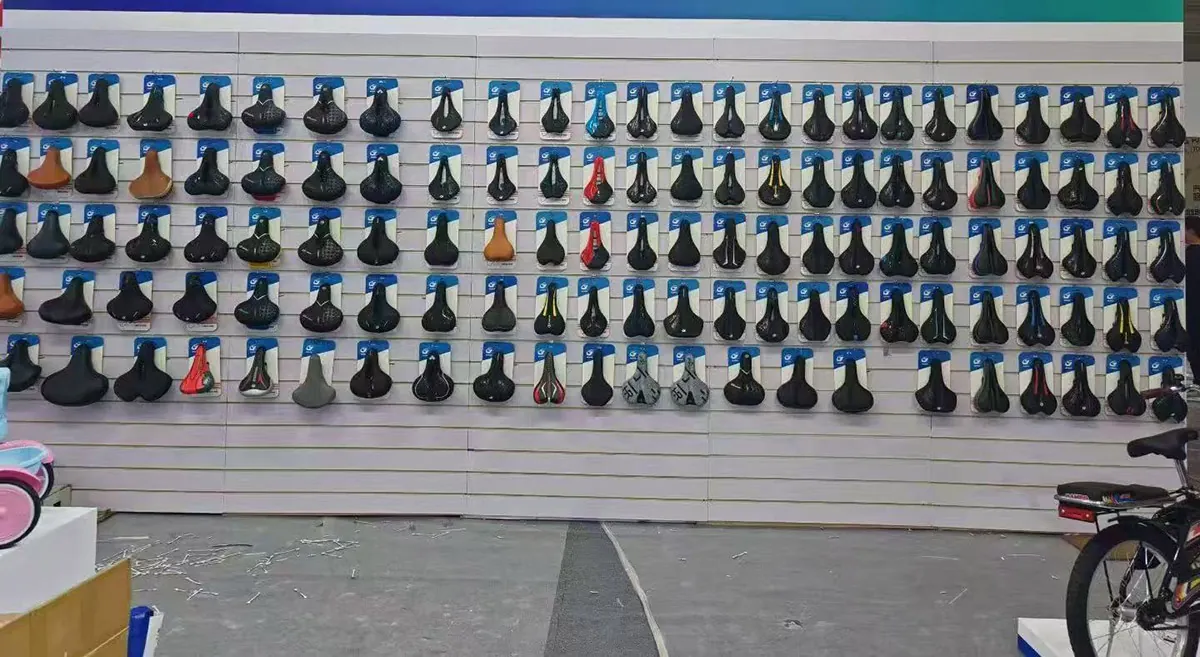
Saddle width has to support the sit bones. City and comfort models generally use a wider, softer saddle than mountain bikes, where the rider moves around and a narrow saddle is less of an obstacle. A wider saddle on a mountain bike rubs; a narrow racing saddle on a city bike is uncomfortable after twenty minutes.
Write the saddle as model or family, width class, rail type and covering. If the buyer has no preference, ask for two options at sample and choose on the bike, not from a catalogue photo.
Handlebar: width, rise and sweep
Three numbers describe most of the feel. Width decides control and how much the rider’s shoulders open. Rise decides how upright the position is. Sweep decides wrist angle. A city bike usually wants more rise and more backsweep than a mountain bike, and a kids bike wants a narrower bar with a shorter reach.
If the buyer changes the frame size but keeps the same bar and stem, the smallest size becomes too long a reach and the largest too short. That is why the contact point specification belongs to the size range, not to the model as a whole.
Stem and reach
Stem length is the cheapest way to tune reach, and the easiest thing to change without re-tooling. It is also the first thing a factory will shorten when a buyer complains the bike feels long. Specify the stem length per frame size, and check it against the sample in each size you intend to stock.
Grips and pedals
Lock-on grips do not rotate under load; slip-on grips do, and that is a warranty conversation. Platform pedals with a composite body are normal on city and kids bikes; metal cage pedals are normal on sport models. Both are cheap, and both are visible to the customer in the first minute, so neither should be left to the factory’s default.
How to specify it on the order
One line per contact point, per frame size where it changes: saddle model and width, bar width, rise and sweep, stem length and angle, grip type, pedal type. Approve the sample in the middle size and in the smallest size, because that is where a badly scaled specification shows up first.
Change one contact point at a time when tuning. Changing saddle, bar and stem together gives a ride that feels different but tells you nothing about which change worked.
Specification fields for the three contact points
Comfort is decided by measurements that can be written on a purchase order. These are the fields that matter, and what each one changes.
| Contact point | Fields to specify | What it changes |
|---|---|---|
| Saddle | Width, shape, rail type, cover material | Pressure on the sit bones; whether the rider slides forward |
| Handlebar | Width, rise, sweep, clamp diameter | Shoulder position and wrist angle |
| Stem | Length, angle, clamp height | Reach; how much weight sits on the hands |
| Grips | Diameter, length, lock-on or push-on | Hand comfort; whether grips rotate under load |
| Pedals | Platform size, axle standard, reflector fitment | Foot support and the parts list for replacements |
Write these as numbers on the order, and the sample approval has something to measure instead of something to feel.
Questions buyers ask
Is a wider saddle always more comfortable?
No. It has to match the rider’s sit bones and the riding position. Wider suits upright city riding; narrower suits mountain biking where the rider moves around.
Can I keep the same handlebar across all frame sizes?
You can, but the reach will be wrong at both ends of the range. Bar width and stem length usually need to change with frame size.
Should kids bikes use the same contact points as adult bikes?
No. Narrower bars, shorter reach, a smaller saddle and shorter cranks. Scaling an adult bike down is the most common mistake in kids ranges.
Do lock-on grips matter at wholesale level?
They prevent rotation, which is a common complaint and a warranty conversation. The cost difference is small and the benefit is visible to the customer.
How do I approve comfort on a sample?
Ride the middle size and the smallest size, and change one contact point at a time when tuning. A catalogue photograph cannot tell you how a saddle feels.
Related guides
- Frame size ranges for wholesale orders
- City bike buying guide for importers
- Sample approval checklist
Send us your order details
If you are building a range and want a price against a real specification, send the model list, the quantity per model, the destination port and whether the order is OEM or our own decals. We quote on that, not on a photo. Write to our contact page or bolunmaoyi@gmail.com.
Working terms: MOQ 100 units per model, 30 percent deposit with the balance before loading, 25 to 30 days in normal season and 30 to 45 days in peak season, FOB Tianjin or Qingdao. CIF and DAP are quoted separately.
Category: bicycle parts wholesale range — categories, MOQ and mixed cartons. · Site map