
Buying mountain bike components is a matching exercise before it is a price negotiation. A lower-priced fork can change the front axle requirement. A different cassette can require another freehub body. A brake substitution can change the hose, pads and service supplies your dealers need. The purchase price tells only part of the story.
For importers, the useful starting point is a complete configuration sheet with exact interfaces, model codes and approved alternatives. This guide explains how to evaluate mountain bike components for conventional, non-electric bicycles, whether you buy complete bikes or replacement stock. It is a purchasing checklist, not an assembly manual or a claim that every specification described here is available from BOLUN.
Use the mountain bicycle category to identify a relevant enquiry, then confirm the current model specification before ordering. A photograph cannot establish material grade, load rating, dimensions or certification.
1. Define the bicycle before choosing individual parts
Start with the intended use, rider group, destination market and sales channel. A bicycle described as “mountain style” is not automatically approved for technical trails or jumps. Ask for the complete bicycle’s intended-use statement and the documentation supporting that use. Match your catalogue wording to the evidence for the supplied model.
Next, define the commercial job. Are these mountain bike components for an original-equipment build, trade-packaged replacement sales, or warranty support? Original-equipment purchasing needs a matched assembly. Replacement purchasing needs compatibility with bicycles already in service. Mixing those two briefs can produce attractive stock that your dealer network cannot use.
Write the target configuration before comparing quotations. Identify non-negotiable interfaces separately from preferences such as colour, graphics or individual packaging. This lets a supplier propose a price alternative without quietly changing the system your workshops must support.
2. Record mountain bike components in a bill of materials
A bill of materials, or BOM, identifies the parts in one approved bicycle configuration. Give it a model code, revision number and approval date. “Aluminium frame, suspension fork, disc brakes, multiple speeds” is a description, not a sufficiently controlled BOM for mountain bike components.
| Component group | Information to record | Evidence to request |
|---|---|---|
| Frame and fork | Model, size, interfaces, permitted fork specification | Drawing, specification sheet and intended-use information |
| Wheel and tire | Rim designation, axle, tire marking, valve | Model codes and dimension records |
| Drivetrain | Shifter, derailleur, crank, chain, cassette or freewheel | Manufacturer combination references |
| Brakes | Lever, caliper, rotor, hose or cable, pads | Compatible assembly and service instructions |
| Cockpit and saddle | Clamp diameters, lengths, insertion requirements | Drawings and applicable installation limits |
| Service stock | Exact replacement codes and quantities | Illustrated parts list linked to the approved build |
Keep the supplier’s item code and the component maker’s model code in separate columns. A local sales code may stay unchanged when the underlying part changes. For mountain bike components with several permitted suppliers, list each approved combination explicitly instead of writing “equivalent quality.”
3. Check frame and fork interfaces together
The frame determines several purchasing constraints: headset fit, bottom-bracket shell, rear axle, brake mount, seatpost diameter and derailleur attachment. Request measured or drawing-based dimensions. “Standard size” is not a dimension and does not provide a useful basis for accepting replacement parts.
For a suspension fork, confirm wheel and tire clearance, steerer type and length, axle arrangement, brake mounting and the frame maker’s permitted fork specification. A change in fork geometry can alter the complete bicycle’s handling. Do not approve a different travel or axle-to-crown dimension solely because the fork fits into the head tube.
Ask what arrives assembled and what your receiving workshop must finish. Record whether headset parts, crown race, axle and mounting hardware are included. When quoting mountain bike components separately, an omitted small fitting can delay an otherwise complete build. Treat those fittings as BOM lines with their own quantities.
4. Specify wheels and tires beyond the inch label
Wheel purchasing combines several interfaces: frame or fork fit, hub width, axle system, brake attachment, cassette interface, rim and tire. Confirm these as a set. A wheel advertised with the right nominal diameter can still have the wrong axle or drivetrain interface for your bicycle.
Use the tire’s ETRTO marking in the order. For example, Schwalbe explains that 37-622 identifies nominal tire width and inner diameter in millimetres. Its guidance also shows why an inch label alone can be ambiguous. Record the actual proposed tire marking rather than copying that example into an MTB specification. See Schwalbe’s size designation guide.
For mountain bike components sold through repair shops, also record the tube size range, valve type and valve length. Confirm rim and tire compatibility with the respective manufacturers, including any tubeless requirements. A “tubeless ready” description on one item does not establish that the whole wheel assembly is ready to use without additional parts or preparation.
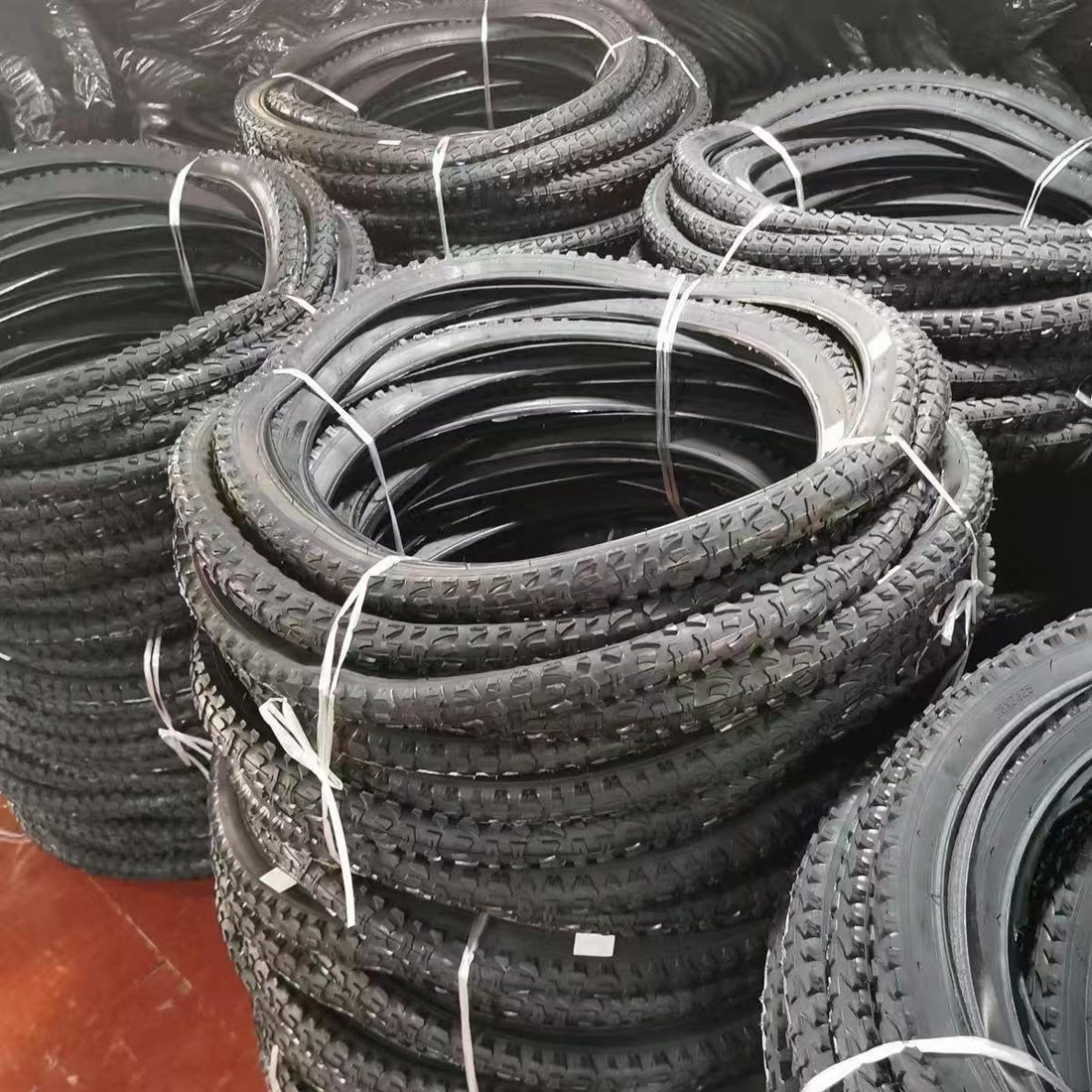
Different tread appearances do not prove tire dimensions, compounds or intended-use ratings. Put the selected tire code and marking on the order.
5. Buy a compatible drivetrain, not a speed count
“Twelve speed” or “twenty-one speed” does not identify a complete transmission. Confirm shifter and derailleur compatibility, chain specification, crank and bottom-bracket fit, chainline and the cassette or freewheel interface. Record the gearing and the manufacturer’s permitted range for the selected combination.
Shimano’s compatibility charts separate rear drivetrains, cranksets, bottom brackets, chainlines and brake combinations. This is a useful reminder that mountain bike components must be checked by model and system, not only by brand name. Retain the relevant document version with your sample approval.
A threaded freewheel and a cassette are different assemblies. Likewise, cassette mounting interfaces cannot be assumed interchangeable. SRAM’s XD and XDR explanation describes different driver-body dimensions and installation conditions. Ask the supplier to identify the proposed interface and the exact compatible cassette; do not approve an unspecified spacer workaround.
For complete-bicycle orders, request the drivetrain configuration as one quoted group. If a component becomes unavailable, assess the proposed replacement against the whole group. This prevents a cheap substitution from creating a second service inventory or an incompatible shift system.
6. Compare complete brake systems
For a closer comparison of rim, mechanical disc and hydraulic disc options, use the bicycle brake types guide with the complete bicycle specification.
Mechanical discs, hydraulic discs and rim brakes create different service requirements. Select the system around the bicycle’s intended use, documented performance, workshop capabilities and replacement supply. A larger rotor or a hydraulic label is not, by itself, proof that one quoted bicycle is suitable for more demanding riding.
| Brake choice | Purchasing checks | Service-stock questions |
|---|---|---|
| Mechanical disc | Lever compatibility, caliper, rotor and mounting arrangement | Which pads, cables and housing match? |
| Hydraulic disc | Matched lever/caliper, hose, fittings, fluid and rotor | Which exact pads, fittings and approved service fluid are needed? |
| Rim brake | Frame/fork mounts, rim braking surface and compatible lever | Which pads, cables and mounting hardware match? |
For hydraulic mountain bike components, record the exact fluid requirement from the model’s service documentation. Do not infer it from the brand alone. SRAM distinguishes DOT-fluid and mineral-oil systems, and its brake hose guidance requires identifying the brake model and fittings. Used service equipment must not cross-contaminate systems.
Confirm permitted rotor diameter and thickness, mounting interface, adapters, pad compatibility and included hardware. Do not add generic tightening values to a purchase sheet: use the instructions for the actual frame, fork and brake assembly. Ask a qualified technician to inspect the approved sample before the production specification is released.
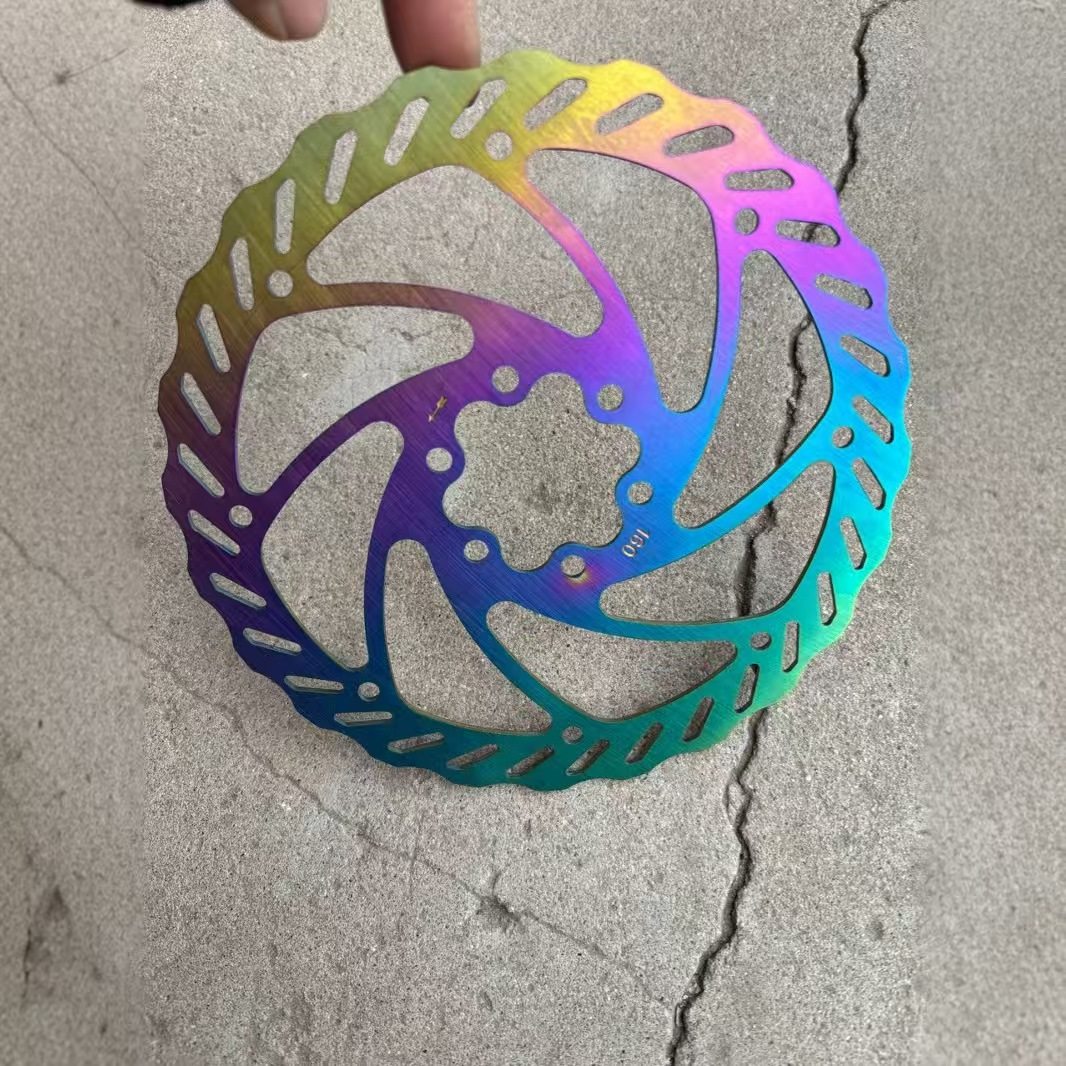
A rotor photograph illustrates the part being discussed. Its finish does not verify material, dimensions, compatibility or braking performance.
7. Do not overlook cockpit and contact points
Handlebars, stems, grips, saddles, seatposts and pedals are easy to simplify on a quotation and expensive to sort after arrival. For handlebars and stems, identify both mating diameters, dimensions and the manufacturer’s installation requirements. For seatposts, check diameter, insertion requirements and the frame’s permitted configuration.
Pedal threads, crank compatibility, saddle rail fit and grip attachment also deserve explicit entries. Record left/right identification where applicable. If mountain bike components are supplied loose, specify whether small bolts, washers, plugs and reflectors are included or separately packed. Do not assume the photographed accessories are part of the quoted price.
List mountain bike components by frame size, even when the catalogue uses one model name. Confirm which cockpit and seatpost specifications change by size. One generic BOM may hide important differences. The receiving team should be able to identify the correct kit without comparing an entire shipment against a showroom photograph.
8. Control substitutions before production
Agree on three approval categories: fixed specification, pre-approved alternative, and change requiring written review. Safety-related interfaces and intended-use changes belong in the last category unless the alternative has already been documented and approved. “Same appearance” is not an adequate acceptance test.
A substitution request should name the original and replacement codes, reason for change, compatibility evidence, price effect, timing effect and spare-parts consequences. Update the BOM revision and sample record before production uses the replacement. Your mountain bike components order should also identify who can approve changes on each side.
For example, suppose a hypothetical 300-bicycle order changes to a different brake pad shape. If your service cartons contain pads for the previous caliper, the bicycles and spares no longer match even if assembly works. Approve the replacement pad code and revise the packing list together. This is an illustration of change control, not a BOLUN order history.
Keep commercial alternatives visible during negotiation. Ask for a comparison table showing the original configuration and each proposed option, with inclusions and exclusions. Comparing mountain bike components this way is more useful than comparing two totals that describe different bicycles.
9. Inspect, label and plan replacement stock
For claim records and replacement-stock planning, see the bicycle warranty and spare parts guide.
Approve a representative sample against the BOM, then define production checks, sampling arrangements and acceptance criteria in writing. Inspect mountain bike components for identity and interfaces as well as appearance: component markings, axle arrangements, tire codes, control operation and completeness of included fittings. Use qualified personnel and the relevant product documentation for functional checks.
Our pre-shipment inspection checklist provides a framework for organising inspection evidence and unresolved defects. A passing visual check is not a substitute for required product testing. Request documents tied to the actual model and destination requirements; a certificate logo in a catalogue is not sufficient evidence.
Plan spare mountain bike components by the installed base and expected service demand, rather than applying one percentage to everything. An illustrative starting worksheet might separate 300 installed bicycles, three component groups and expected reorder timing. The actual spare quantities should follow your sales history, failure records and replenishment lead time, not those example numbers.
Label every spare carton with buyer SKU, manufacturer code, compatible model/BOM revision, quantity and left/right position where relevant. Separate visually similar parts with different interfaces. Protect rotors from bending and contamination, and agree protective packaging for finished surfaces. Confirm package quantities, carton dimensions and packing responsibility in the quotation.
10. Send a quotation request that can be checked
When sourcing a complete bike around these components, review the wholesale mountain bicycle range and confirm the actual model configuration.
Before requesting mountain bike components, prepare one file containing:
- Complete bicycles, assembly components or replacement stock: state the purchasing purpose.
- Destination market, intended use, rider group and model quantities.
- Frame/fork interfaces, wheel and tire designations, and drivetrain combination.
- Complete brake specification and the relevant technical references.
- Cockpit dimensions, included hardware and packaging requirements.
- Fixed specifications, acceptable alternatives and written change-approval rules.
- Sample approval requirements, inspection evidence and documentation needs.
- Service-part codes, quantities and preferred replenishment arrangements.
Attach dimensioned drawings or readable code photographs of the mountain bike components requested. Ask the supplier to mark every unresolved item instead of filling gaps with assumptions. Keep quotation validity, shipping basis, tooling or artwork charges and sample costs separate so commercial comparisons remain clear.
For a broader stocking discussion, use the distributor parts procurement checklist. This mountain bike components guide adds the interface and change-control detail needed for a defined MTB configuration.
Can mountain bike components with the same brand and speed count be mixed?
Do not assume so. Identify the exact models and use the manufacturer’s compatibility references. A product family name can cover several generations and applications.
Should an importer approve a substitute to avoid a shipment delay?
Only after reviewing its compatibility, intended use, service support and commercial effects. Record the decision against the revised BOM; delivery pressure does not remove the need for approval.
What information should I send BOLUN first?
Send the bicycle or part reference, quantity, destination and available specification sheet. Availability, component combinations, pricing, MOQ, documents and lead time must be confirmed for the requested configuration.
Get a Quote / Request Catalog — submit your model list or mountain bike components worksheet through the enquiry form. State whether you need a complete bicycle quotation, matching parts or a current catalogue so the request can be checked against the proposed order.
Where this sits on the site
If you are putting a container together, the pages below carry the model range, the trade terms and the quote form.