
A frame material is not a complete specification. Buyers comparing steel, aluminum, carbon fiber and titanium need to compare the frame design, manufacturing route, joining process, finish, test evidence and replacement policy as well. Two frames made from the same broad material can differ sharply in geometry, tube shape, wall design, weld quality, layup or intended use. A material name by itself cannot establish weight, strength, ride feel, price or durability.
For an importer, the useful question is: which material and construction fit the target bicycle, price position, service model and production controls?
 This guide sets out a procurement framework. It does not claim that one material is universally best or that BOLUN offers every frame type described. Confirm actual models, capabilities, prices, minimum order quantities and compliance evidence with the supplier before quoting or placing an order.
Compare the four material families
| Frame material | Common sourcing considerations | Main buyer trade-off |
|---|---|---|
| Steel | Tube grade, diameter, wall profile, corrosion protection, joining and finish | Broad design and repair options; specification and finish require control |
| Aluminum alloy | Alloy and temper, tube shaping, weld process, heat treatment, fatigue and corrosion controls | Can support a cost-conscious lightweight design; process consistency and validation matter |
| Carbon fiber composite | Fiber/resin system, layup schedule, mold, curing, bonding, inspection and repair policy | Design can tune stiffness by area; traceability and process control are critical |
| Titanium alloy | Exact grade, tube source, joining procedure, surface finish and traceability | Premium material choice with specialized fabrication and sourcing considerations |
These are procurement categories, not guarantees of performance. Frame geometry, tube or laminate design, dimensions, joints, fork, wheels, tires, saddle and handlebar all influence how a complete bicycle behaves. Ask suppliers for model-specific evidence rather than relying on a material label or a generic weight comparison.
Steel: match the tube specification to the design
Steel frames range from straightforward utility constructions to carefully selected butted or heat-treated tubes. “Chromoly” or “high tensile” alone is not a full purchase specification. Record the actual tube material or grade when supplied, tube diameters, butting profile where applicable, wall specification if available, frame size, joining method, coating and corrosion-protection process. A brand name for tubing should be verified against the frame bill of materials or the supplier’s approved drawing.
Steel may suit buyers who value familiar fabrication, a wide range of frame designs and repair options in some markets. Those benefits do not remove the need to check weight, corrosion protection, weld or braze consistency and finish quality for the intended use. A thin-walled premium tube set and a basic utility frame are both “steel” but are different products and cost structures.
For a sample, inspect alignment, tube junctions, weld or braze appearance, paint coverage, drain or vent details where specified, and the frame’s interface dimensions. Keep a reference sample and a dated drawing. Ask what evidence is available for the frame and complete bicycle’s applicable fatigue and impact tests. Reynolds’ published steel tubing information illustrates that steel grades and tube constructions have distinct properties; it should not be treated as a specification for another supplier’s product.
Aluminum: define alloy, temper and process controls
Aluminum frames are used across many price and bicycle categories, but “aluminum frame” still leaves important questions unanswered. Request the declared alloy and temper where relevant, tube dimensions and forming details, weld process, post-weld treatment if specified, and the drawing revision. Confirm whether the same construction is used across sizes or whether the design changes between frame sizes.
The commercial advantage often sought is a balance of mass, cost and scalable production.
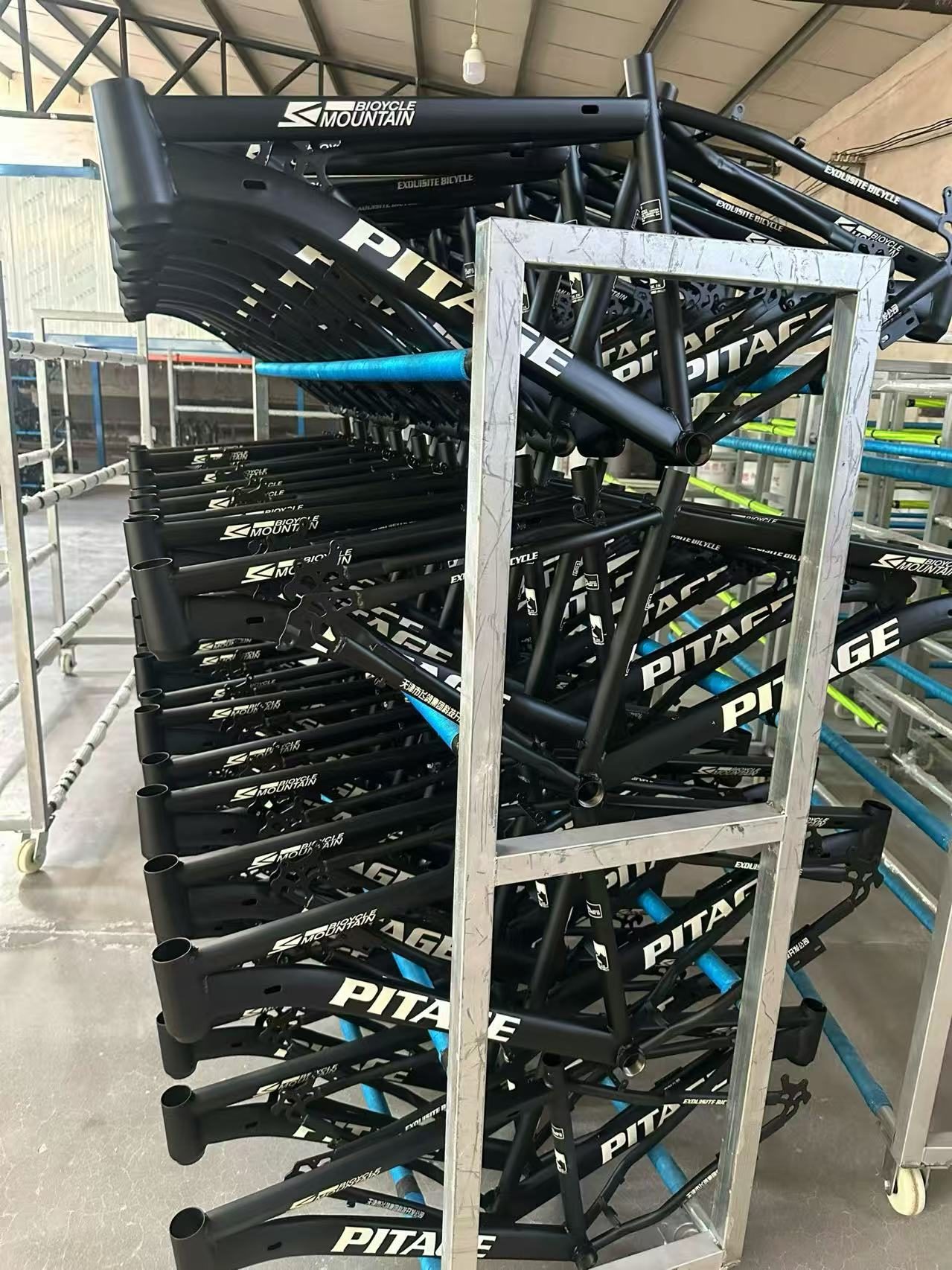 Evaluate the actual offer rather than promising that every aluminum frame is lighter or cheaper than every steel or carbon frame. Weld geometry, tube shape, section size, reinforcement and paint all affect the finished product. A change in tubing or welding route can require renewed sample approval and test review.
During sample review, check frame alignment, dropout and brake interfaces, bottom bracket and headset dimensions, weld consistency, visible surface defects and coating coverage. Request process records or inspection criteria that correspond to the model. If a supplier states a heat-treatment condition or a test result, identify the exact model and revision covered; a catalog statement is not automatically evidence for every frame in a product family.
Carbon fiber: buy the process and traceability, not just the word
Carbon frames are composite structures. Fiber direction, laminate schedule, resin system, mold design, curing process, bonded interfaces and quality controls affect the finished frame. “Carbon” does not tell a buyer whether two frames use the same layup, resin, manufacturing route or inspection standard. Nor does a higher grade label alone establish that a frame is safer, stronger or better suited to a specific rider or application.
Ask for the model drawing, frame-size range, material declaration, manufacturing route, critical process controls, traceability method and model-specific test evidence. Clarify which items are produced in-house and which are supplied by another party, if that affects traceability or warranty handling. Trek’s description of its own carbon process shows how molds and material placement can vary by design; it is an example of process specificity, not a claim about BOLUN’s production.
Carbon sample inspection should follow the supplier’s stated criteria and a competent inspection plan. Check finish, interfaces, alignment, serial or batch identification and any documented non-destructive inspection required by the contract. Define how impact damage, cosmetic marks and suspected structural defects are evaluated. A visual check alone cannot establish hidden laminate condition. Agree on written defect handling, replacement parts and warranty responsibilities before a commercial launch.
Titanium: verify grade and specialist fabrication
Titanium is usually positioned as a premium frame option. The purchase record should identify the exact alloy or grade, tube supplier or traceability evidence where available, tube dimensions, joining procedure, frame size, finishing and test documentation. “Titanium” without grade and process information is too broad for meaningful supplier comparison.
Joining titanium requires controlled procedures and suitable equipment. Reynolds’ welding guidance notes that titanium needs special equipment and procedures to prevent oxygen contamination around weld areas. For a buyer, this means asking how welding is controlled, what acceptance criteria apply, how the supplier records the frame batch and who is responsible for a rejected weld or a repair request. Do not infer process capability from a product photograph.
Compare the actual quotation and service plan with the target market. Confirm sample lead time, production capacity for the specific model, spare-frame support, finish options, packaging protection and the availability of model-specific documentation. Treat these as open questions until the supplier confirms them. A titanium frame’s material name does not establish a particular weight, lifespan or trade price.
Match material to the market and the full bicycle
For color references, sample approval and finish criteria, see the bicycle paint finish buyer guide.
Start with the intended customer and use case: city, trekking, mountain, road, youth or another defined category. Then set the expected trade position, acceptable bicycle mass if the brand has a target, frame sizes, geometry, brake and drivetrain interfaces, tire clearance, rack or fender mounts, finish and service expectations. These requirements may eliminate some constructions before price comparison begins.
Compare complete landed offers only after suppliers quote the same frame specification and included scope. A frame-only offer and a complete bicycle offer are not comparable. List fork, headset, seat clamp, derailleur hanger, axles, cable guides, finishing, packaging, labels, samples, test documents and replacement parts as separate line items where applicable. State whether price includes these items, leaves them open or excludes them.
For a private-label program, approve the logo artwork, paint sample, color reference, decals, serial-number format and carton protection against a signed sample. Record the frame drawing and bill of materials revision. Any change to the frame material, tube profile, weld route, laminate, resin, mold, paint or supplier should trigger a documented change review and a decision about new samples or tests.
Compare supplier offers on the same frame specification
A material comparison only helps when the quotations cover the same job. Send each supplier the same frame size range, geometry or reference drawing, bicycle category, interface list, finish, included hardware and packaging scope. Ask suppliers to identify the exact construction and any substitutions. A quote for an unfinished frame set should not be compared directly with a finished, branded frame that includes a fork, hanger, axles or trade packaging.
For steel, record the stated tube grade or source when available, tube profiles, joining route and corrosion protection. For aluminum, request the alloy and temper where specified, forming and welding route, heat-treatment details where applicable, and the finish. For carbon fiber, ask for the fiber and resin system, layup and curing controls, bonded-in parts and traceability. For titanium, clarify the exact grade, tube source, joining controls, finish and batch records. If a supplier cannot disclose a proprietary detail, ask what verifiable drawing, sample, inspection record or test report can demonstrate that the agreed specification is being followed.
Compare total sourcing risk as well as unit price. Put sample charges, tooling or mold costs, logo and color setup, inspection, replacement hardware, spare-frame support and packing on separate lines. Ask which costs recur on a reorder and which depend on a model change. Do not treat an estimated weight, lead time, MOQ or test result as confirmed unless it is tied to the quoted model and order conditions.
Before production, approve one production-intent sample against a dated drawing and a written deviation list. The purchase order should identify the material and process requirements, approved finish, acceptance criteria, test-document scope, change-notification duty and responsibility for rejected units. This gives procurement, quality and after-sales teams one reference when a later batch or replacement frame is reviewed.
Quality and compliance checks
A frame-material comparison should be connected to the complete bicycle’s safety and performance requirements. ISO 4210-2:2023 covers design, assembly and testing requirements for several bicycle categories and refers to ISO 4210-6 for frame and fork test methods. The standard’s scope excludes some specialist bicycle types, and destination-market rules may add requirements. Ask the importer’s compliance owner to identify the applicable category, market rules, test edition and evidence required for the actual model. Do not describe a supplier as “certified” unless a valid certificate exists and its scope covers the product.
A practical supplier file can contain the approved drawing, material declaration, supplier and process details, sample approval, model-specific test reports, inspection records, packaging specification and change history. Verify report identity, model, size or representative sample, laboratory, issue date and scope. If the documentation is incomplete, mark the order as pending confirmation instead of filling gaps with assumptions.
For production inspection, agree sampling method and acceptance criteria before manufacture. Check identification and dimensions against the approved drawing; inspect surface finish and interfaces; record visible defects; and reconcile units, labels and cartons. Where testing is required, use an appropriate competent laboratory or agreed procedure. This guide does not set universal pass thresholds or replace engineering approval.
Frame sample checklist for buyers
- Define bicycle category, intended use, market and frame-size range.
- Specify exact material or grade, construction, joining route and finish.
- Approve drawings, interfaces, geometry and revision control.
- Confirm included and excluded frame hardware and packaging.
- Request model-specific safety or performance evidence for the destination market.
- Inspect a production-intent sample and record the decision.
- Agree material, process and supplier change notification in writing.
- Define defect classification, warranty handling and replacement support.
For adjacent buying tasks, see the mountain bike components guide, the pre-shipment inspection checklist and the city bicycle sourcing guide. They help structure a component brief and inspection record; model-specific engineering approval remains necessary.
Request a comparable quotation
Send the supplier your bicycle category, intended market, target frame material or approved alternatives, size range, interface requirements, finish, annual forecast if known, initial order quantity if confirmed, packaging scope and documentation needs. Attach a drawing or reference sample where available. Ask each supplier to mark exceptions instead of silently substituting a material or construction.
Request a bicycle quotation with the frame specification and target program. Confirm model availability, MOQ, pricing, lead time, customization, test evidence and warranty terms directly against the specific order before approval.
Where this sits on the site
If you are putting a container together, the pages below carry the model range, the trade terms and the quote form.